





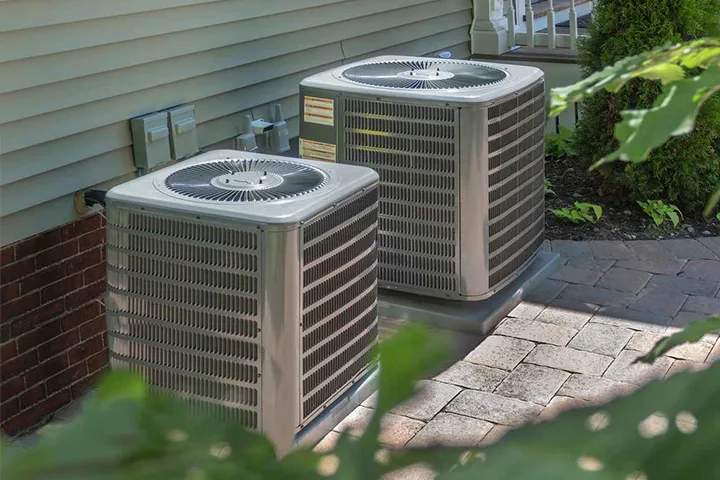
We love living in Gilroy. We have the Garlic Festival, beautiful weather, and great community. But living in the Santa Clara Valley comes with specific air quality challenges—from high pollen counts in the spring to the unfortunate reality of wildfire smoke in the late summer and fall.
Did you know that according to the EPA, indoor air can be two to five times more polluted than outdoor air?
Since we spend about 90% of our time indoors, the quality of the air you breathe inside your home has a massive impact on your health, sleep, and comfort. If you are waking up congested, dealing with constant dust, or suffering from allergies, your home’s air quality might be the culprit.
Here are five proven ways to clear the air in your Gilroy home.
1. Upgrade Your HVAC Air Filter
The standard fiberglass filter (often called “blue fluff”) that comes with many furnaces is designed to protect the equipment from large debris, but it does almost nothing to protect your lungs.
To improve air quality, check the MERV rating (Minimum Efficiency Reporting Value) of your filters.
- MERV 1-4: Captures dust mites and pollen.
- MERV 5-8: Captures mold spores and pet dander (Good).
- MERV 9-13: Captures fine dust, smog, and smoke (Best for homeowners).
Pro Tip: Don’t just buy the highest number! A filter that is too thick (MERV 16+) can restrict airflow and damage your system. Ask an OSS HVAC technician which filter is safe for your specific unit.
2. Seal Your Ductwork
Your air ducts run through “unconditioned” spaces like your attic or crawlspace. If your ducts have holes, cracks, or loose connections, they aren’t just leaking air out—they are sucking dirty air in.
Leaky ducts act like a vacuum, pulling in insulation fibers, dust, and rodent droppings from your attic and blasting them into your living room. Having your ducts inspected and professionally sealed ensures that the only air entering your home is air that has passed through your filter.
3. Control Your Humidity
In Gilroy, we get hot, dry summers, but our homes can still trap moisture in bathrooms and kitchens.
- High Humidity: leads to mold and mildew growth.
- Low Humidity: causes dry skin, irritated throats, and makes viruses spread easier.
Aim to keep your indoor humidity between 30% and 50%. If your home is consistently muggy, your AC might need a tune-up (the AC removes moisture as it cools). If it’s too dry, consider a whole-home humidifier.
4. Consider a Whole-Home Air Purifier
Portable air purifiers are great for a single bedroom, but they can’t handle a whole house. For the ultimate protection—especially during wildfire season—consider an in-duct air purifier (like a UV light or advanced filtration system) installed directly into your central HVAC system.
These systems treat the air in every room of your house every time your fan runs, neutralizing bacteria, viruses, and odors before they reach your family.
5. Ventilate Wisely
Modern homes are built to be airtight for energy efficiency, which is great for your electric bill but bad for fresh air.
- When air quality is GOOD: Open windows in the early morning or late evening to create a cross-breeze and flush out stale indoor air.
- When air quality is BAD (High Pollen/Smoke): Keep windows shut and set your HVAC thermostat fan to “ON” (instead of “AUTO”) to constantly circulate indoor air through your filters.
Don’t Guess—Test!
If you aren’t sure what is lurking in your air, we can help. At OSS HVAC, we don’t just fix broken ACs; we offer comprehensive Indoor Air Quality (IAQ) solutions.
From high-efficiency filter installations to duct sealing and UV light purifiers, we can customize a solution that fits your home and budget.
Ready to breathe easier? Contact OSS HVAC today at (669) 500-6132 to discuss your air quality options.uts of lorem ipsum’s origin, however, the “how and when” still remain something of a mystery, with competing theories and timelines.

Leave a Reply